Hydroxy type oxygen generators
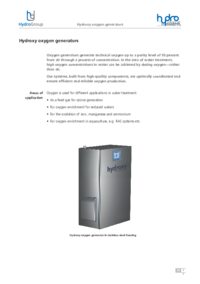
Hydroxy oxygen generators Hydroxy oxygen generators Oxygen generators generate technical oxygen up to a purity level of 95 percent from air through a process of…
Working for the HydroGroup®
A contemporary work environment, motivated staff, cutting-edge technology and an innovative mindset enable us to offer problem-driven, customer-specific technologies,…
Note
We want to make the online application process as easy as possible. This is why we limit the online application form to the most important information.
Please note the following…
Apprenticeship at HydroGroup®
A contemporary work environment, motivated staff, cutting-edge technology and an innovative mindset enable us to offer problem-driven, customer-specific…
Working at HydroGroup®
Advantages of a family-run company - paired with the attractiveness of a market leader.
Become part of the HydroGroup®
Our values: reliability, punctuality, honesty
…
Efficient process and feed water treatment with plants from RWT GmbH
RWT GmbH combines various technologies for effective industrial water treatment:
Ion exchange for the targeted removal of…
Membrane processes in water treatment refer to processes in which substances are separated from aqueous solutions using membranes. Microfiltration (MF) and ultrafiltration (UF) are primarily used…
Oxygen enrichment
Oxygen is the most important oxidation agent in the context of water treatment. In addition, a sufficient oxygen content is relevant for the drinking water quality and for the…
Radioactive and anthropogenic substances
Naturally radioactive substances (radon, uranium) as well as anthropogenic substances such as pharmaceuticals, fertilisers and pesticides as well as…
Hygiene processing and disinfection
Microbiological contamination can occur in natural water resources as well as during transport due to damage in the pipeline network and in reservoirs. In…

![[Translate to English:]](/fileadmin/user_upload/stellenangebote-grafik-target.svg "[Translate to English:]")

![[Translate to English:]](/fileadmin/user_upload/studium-grafik.svg "[Translate to English:]")